
American Institute of Certified Public Accountants
Project:
User Experience Research (UXR)
Tools Used:
Quantitative Research: Optimal Workshop (Chalk Mark/ Tree Jack) and Survey Questionnaires.
Qualitative Research: Remote moderated interviews through ZOOM.
Scheduling: Doodle.
Prototype: Invision.
Project Brief:
To validate UX design features through user research. The main business goal was to create a separate customised member website (RAVE), which is accessed from the current AICPA website. Content features were established by business analysts, whom had a strategic view of the business goals for this project.
Work Structure:
The project was divided into two main phases - each phase with its own feature release dates. One was named Alpha + and the other was Beta. Both phases ran through bi-weekly sprints and work was coordinated with counterpart teams in both the United States and Latvia. The US UXR team held the responsibility of generating the research leads and to follow up on the scheduling of interview appointments. The UK UXR team were coordinating the research validation with the UX designers. Both UXR teams worked conjugally in conducting the Qualitative/ Quantitative research and analysing the data.
Site Transformation
A button on the header of the homepage - Not yet determined - named RAVE is placed to gain access to the customised member’s area of the AICPA web site. Once on RAVE, the user member has the option to move back to the AICPA. Some information on the micro site isn’t as exclusive and elaborative, so many links exists to refer back to the original site.
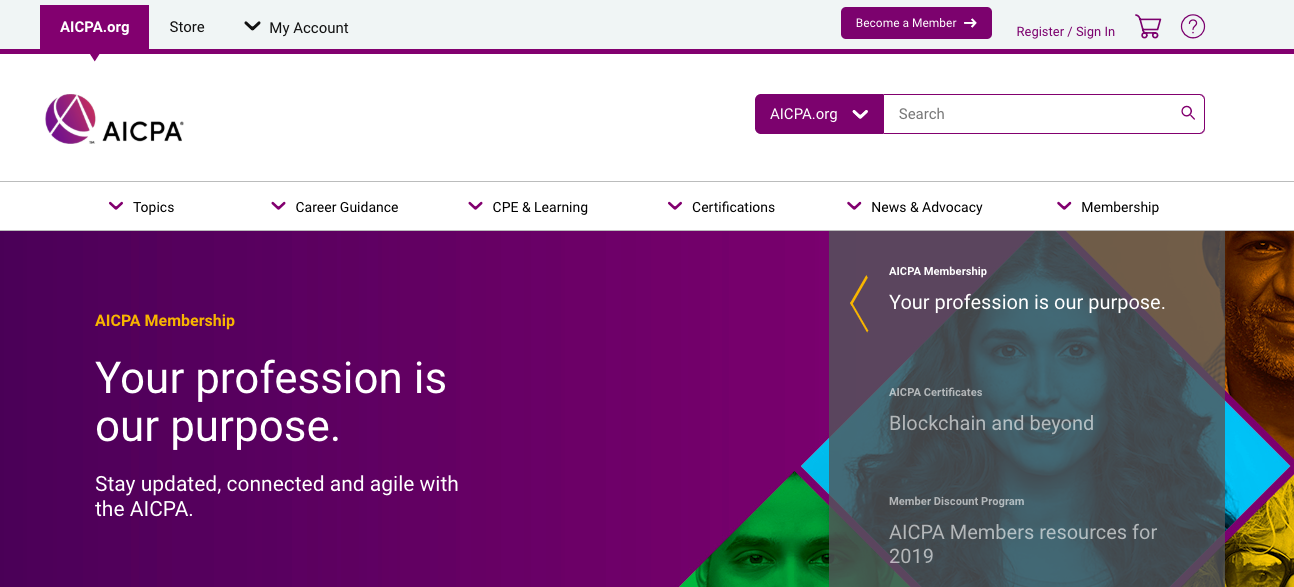
AICPA Web site
Original site that is open to the public to access information regarding membership and all industry related news.
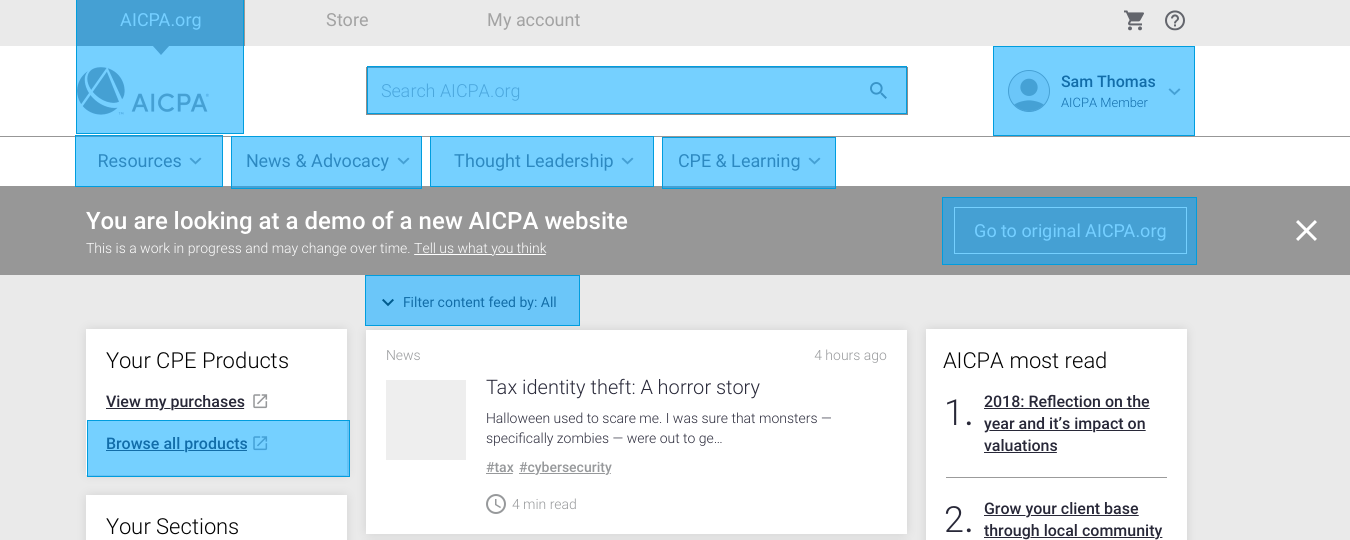
UX DESIGN PROTOTYPE
A personalised web site was designed to customise the AICPA member’s experience and to receive relevant content, which the user filters according to her/his area of professional expertise.
Areas of User Research:
Global Navigation Menu.
Search Function.
Selection of topics and subtopics during the on-boarding process to customise member’s content.
RAVE link to AICPA main web site.
User engagement features on the RAVE micro site.
First-Click Test (Chalk-Mark Test)
To test the function features of the navigation bar, a Tree-Jack test, using Optimal Workshop, would come in handy. But before that we need to understand where a user might go first when presented with a given task. For example - We might want to rethink having ‘My Webcasts’ in the main navigation if users would never think to go to the main navigation to find their previously purchased items from the site store.
When writing the tasks, I had to consider:
Is there wording too vague or too leading?
Do any of theses questions seem necessary or should it be dropped?
Any critical questions that I missed.
How much of the prototype screen should be shown for the tasks? Should the screen be snipped for each question?
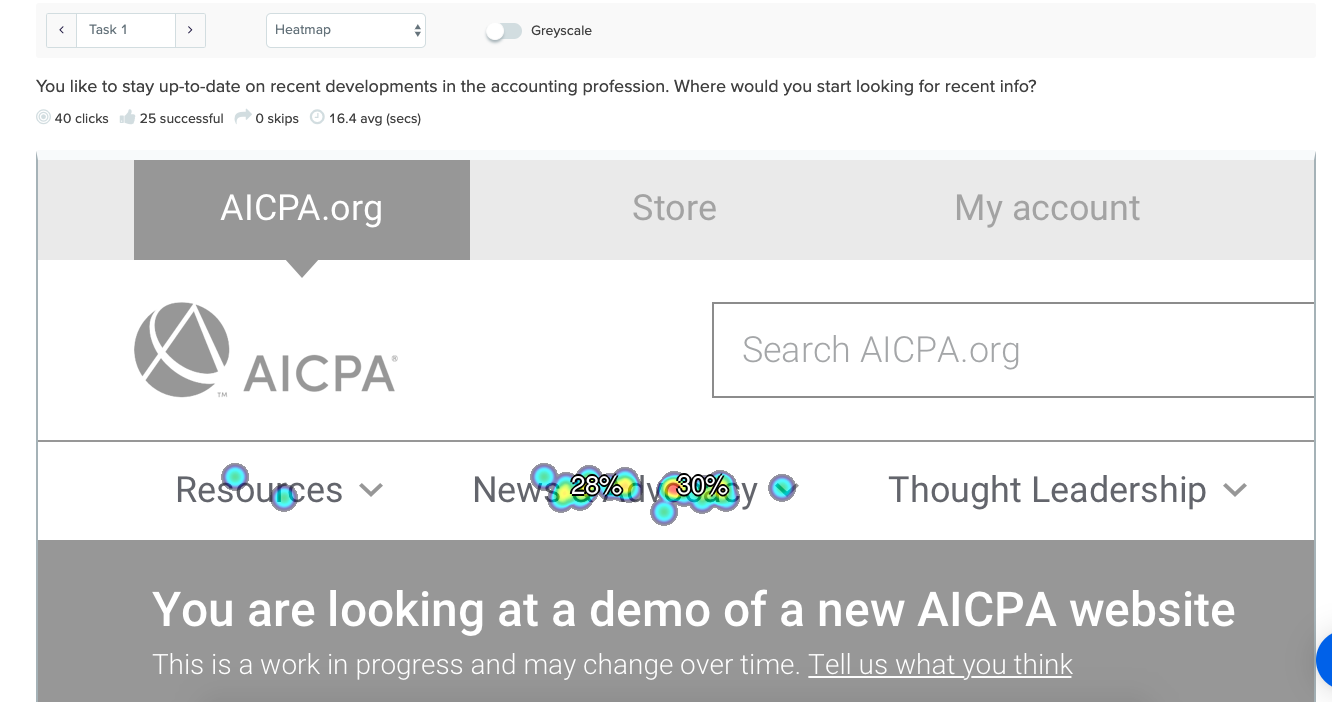
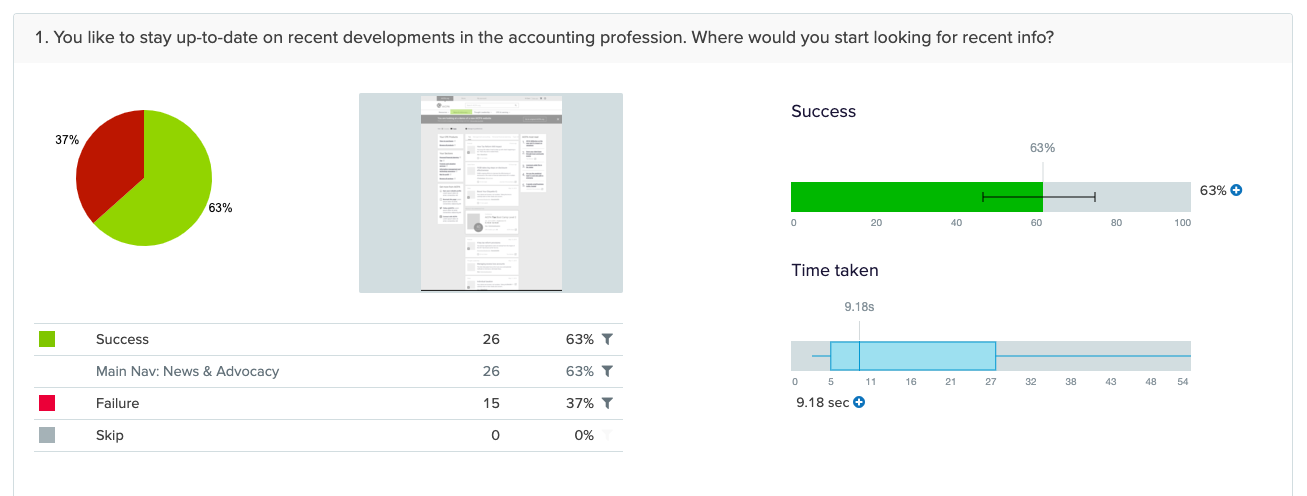
FIRST CLICK-TEST ANALYTICS
10 task Questions were prepared to measure the percentage of success of accomplishing each task.
Qualitative Research Analysis
The main purpose of this remote moderated research study is to evaluate the user experience of the on-boarding journey and assess user response to the usability of a feed-style homepage. Specifically, this research study aims to:
Evaluate the user experience of on-boarding to the new AICPA website with a focus on the information users are required to input.
Assess participants’ response to how topics/subtopics are organised and presented (do users need max / min requirements or want to skip sub-topics?).
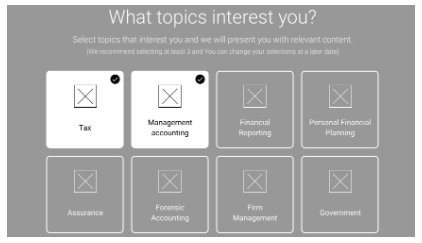
Selection of topics/ sub-topics
Determine whether participants understand how to edit their preferences.
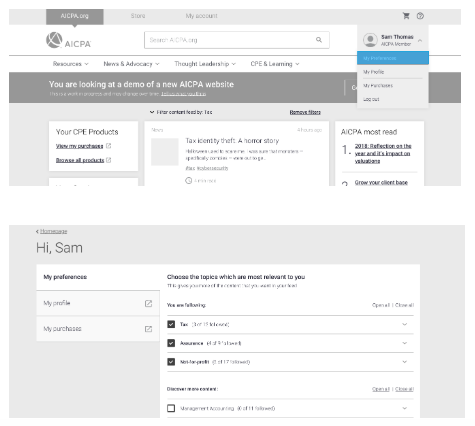
Understand better how users interact with filters both on the timeline and search results page.
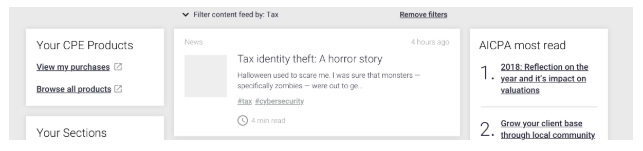
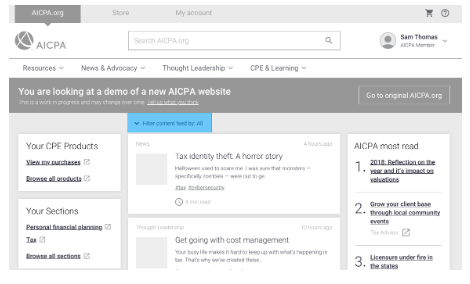
Filtering the results
Observe reactions to the ‘product card’ in timeline and search results pages.
Evaluate the usability of hashtags, noting whether users understand general usage of hashtags as well as the difference between regular/bold hashtags.
Further Work:
This is an ongoing project and research is conducted at every work cycle (bi-weekly). Iterations from research analysis are forwarded to UX designers for implementations. Every project stage comes with its own product features that are introduced by the Business Analysts reflecting on the business goals. Such features are validated through Quan/ Qual techniques with selected members of the AICPA.